
Research Partnership: Advancing Natural Hydrogen Production and Carbon Mineralisation
Decahydron has formalised a research partnership with the Irish Centre for Research in Applied Geosciences (iCRAG) co-funded by Research Ireland, the Dublin Institute for Advanced Studies (DIAS), and the University of Edinburgh (UoE).
This collaboration supports our ongoing efforts to develop scalable technologies for permanent carbon sequestration and geological hydrogen generation.
Preparing for Large-Scale CO₂ Mineralisation
As part of preparations for a large-scale CO₂ mineralisation pilot, the project aims to achieve the permanent sequestration of approximately 100 tonnes of CO₂ per day. Upon successful completion of this pilot, we intend to scale operations to an industrial – level programme targeting the mineralisation of several million tonnes of CO₂ annually.
This joint industrial project, co-funded by Research Ireland, will be delivered by Decahydron’s geoscience team in collaboration with researchers from iCRAG and UoE.
The research focuses on:
• Fingerprinting system aspects of hydrogen generation.
• Experimental and numerical modelling of fluid –rock interactions.
• Investigation of the chemical pathways of hydrogen generation under reservoir conditions.
Decahydron’s mineralisation technology is the first of its kind in the region, operating entirely without water. This enables scalability beyond conventional in -situ mineralisation approaches, which typically require around 50 tonnes of water to sequester each tonne of CO₂.
Refining Targets and Subsurface Modelling
Within Decahydron’s licence areas, potential sites for hydrogen extraction and carbon mineralisation are being evaluated using a combination of 3D geophysical inversion modelling and advanced geological mapping.
These analyses help refine exploration targets and improve understanding of the subsurface architecture, allowing for the development of precise injection strategies and site-specific operational models.
Geological Framework and Parallel Studies
The initiative draws on decades of academic and industry investigation into the UAE-Oman and Southern European ophiolites, which preserve some of the most complete examples of oceanic lithosphere worldwide.
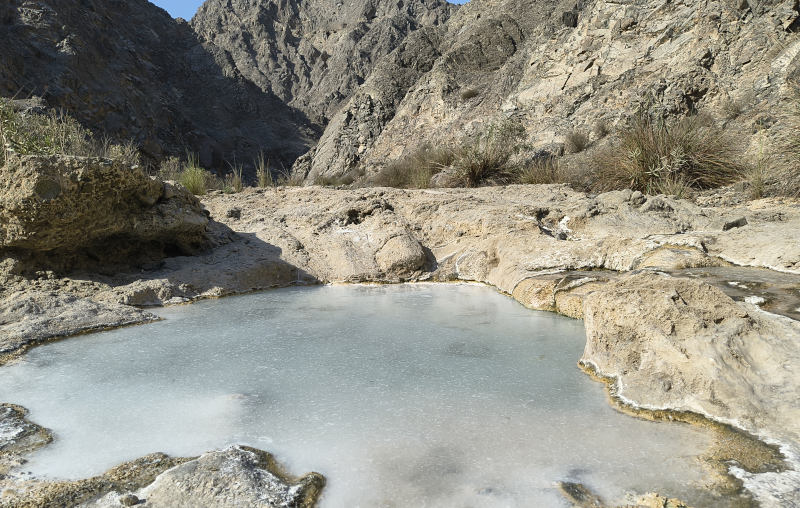
Alongside the CO₂ mineralisation work, Decahydron and its partners are surveying hydrogen-emitting surface environments to measure gas fluxes. The results will help guide future exploration.
Towards Scalable, Permanent Carbon Storage
Through this collaboration, Decahydron and its academic partners are generating new knowledge and technologies that advance both natural hydrogen production and carbon mineralisation. The outcomes of this work highlight a scalable, water-free pathway for permanent CO₂ storage and contribute to global efforts to achieve net zero emissions.