
A single subsurface ophiolite reactor combines chemical enhancement and physical displacement: each kilogram of hydrogen produced removes net CO₂ from the atmosphere.
CO₂ injected deep into the ophiolite dissolves olivine and turns into carbonate. The iron released from the olivine oxidises, and that reaction makes hydrogen. The CO₂, heavy and reactive, stays low and is mineralised. The hydrogen, light, rises and collects below a dense dunite seal, where a separate well produces it.
One reactor, two wells
Conceptual model, not to scale. The CO₂ mineralises on its way through the rock and never reaches the hydrogen producer.
How the reactor works
Published science
The link between CO₂ mineralisation and hydrogen formation is set out in our peer-reviewed paper with the University of Edinburgh.
Where it is tested first
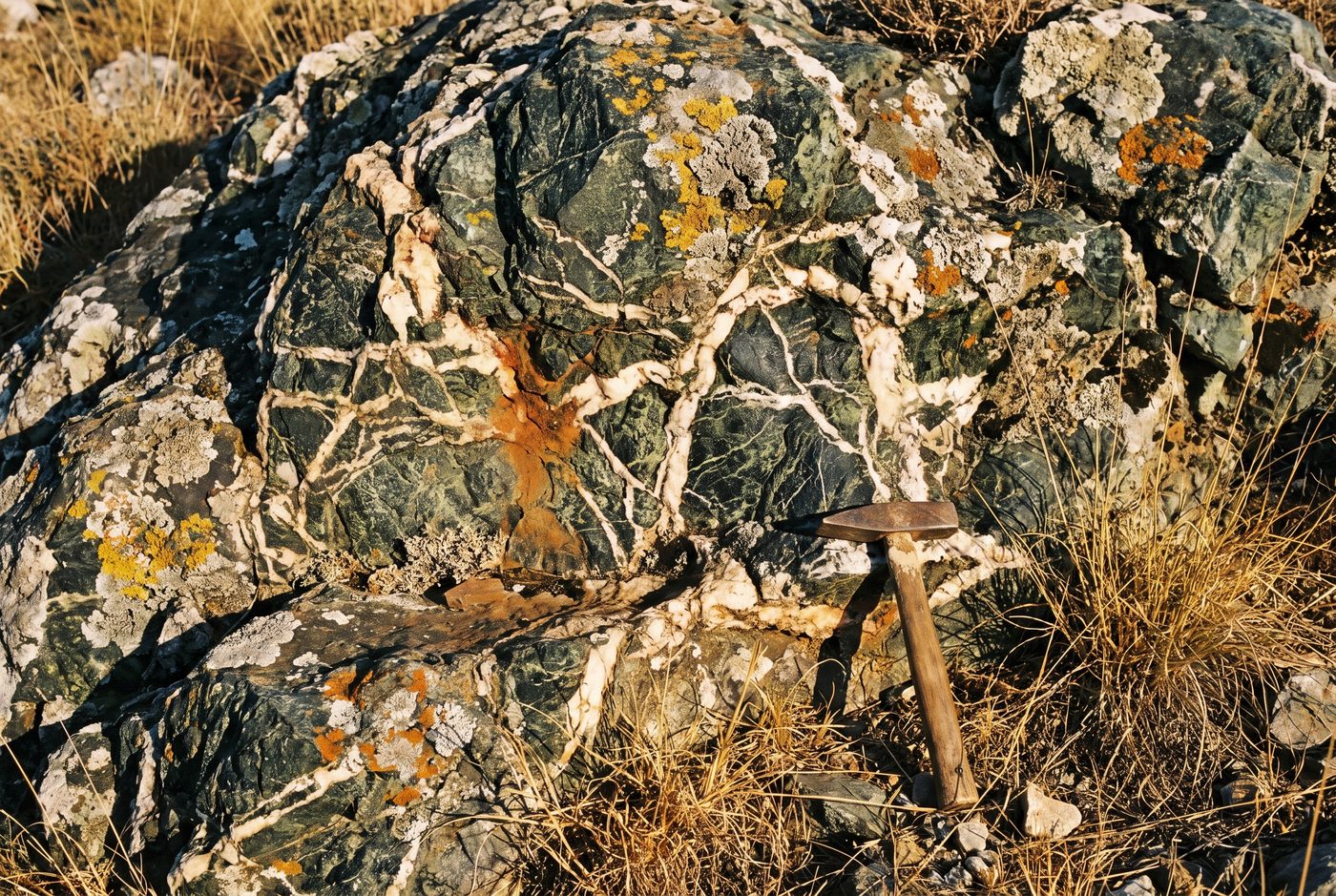
Our PITHOS project in the Othrys ophiolite of central Greece will inject 150,000 tonnes of CO₂, captured at Holcim’s HERACLES cement plant, with Weatherford. It is where carbon in and hydrogen out will be measured in the field.
See the PITHOS project
Carbon-negative hydrogen
If you capture CO₂ or need clean hydrogen, one reactor can serve both. Get in touch.
Partner with us